


After three days at ONPHA 2026, one phrase stuck with us: "We are fired up!" Last year, we said the stars were aligning. This year, it felt like the sector had moved from possibility to action. From housing as infrastructure to technology in everyday operations, housing leaders aren't just talking about change. They're making it happen, and doing it together.
This year's theme was Forward by Design, and so much of what we heard came back to one simple question: what can housing providers do with the homes, people, data, and relationships they already have?
Here are five takeaways that stood out and why they matter for anyone leading in this space:
1. Housing Is an Investment, Not an Expense
The opening plenary on Investment by Design set the tone early. The big idea: housers need to stop looking at community housing as a government expense, and start seeing it as productive public infrastructure, an investment that benefits the economy, the healthcare system, and entire communities.
One comparison really hit home. Housing someone in community housing costs about $1,000 a month. An emergency shelter costs $8,000 to $10,000. A month in hospital? Over $50,000.
The panel also shared research projecting that more investment in social housing could prevent around 156,000 emergency department visits and free up more than 500,000 hospital bed days.
The takeaway? Housing providers already know the value they create. The opportunity is in telling that story in a way funders and governments can't ignore. And when the audience was asked for the most important ingredient for long-term success, the words that came up most were storytelling and collaboration.
Which brings us to the next takeaway.
2. Collaboration Over Competition
The GTHA Public Housing Collaborative session was a great example of what's possible when organizations choose to work together. Six public housing providers across the Greater Toronto and Hamilton Area, representing over 80,000 homes and about 40% of Ontario's public housing, came together to share data, compare challenges, and make a stronger case for investment.
As one speaker put it, they could have easily seen each other as competitors for limited funding. Instead, they chose collaboration.
It wasn't always comfortable. Sharing building data that isn't perfect felt like a risk. But it paid off, and now they're exploring joint purchasing, shared contracts, and training.
And this isn't a one-off story. We heard versions of it throughout the conference. In Ottawa, housing providers pooled their funding instead of competing for it and created a Hoarding Assistance Team. At the time of the session, every threatened eviction the team had worked on had been avoided.
The takeaway? Collaboration isn't just an advocacy tool anymore. It's becoming a practical way to reduce costs, improve operations, and strengthen the sector.
In the closing plenary, one panelist compared it to rebar: on its own, each piece is just a rod. Wired together, it holds up the whole structure. Now that's an analogy that drives the lesson home.
3. Community Engagement Doesn't Happen by Chance
Last year, one of our big takeaways was that tenant-first means communication-first. This year, a session on supporting tenants with complex needs, led by Durham Housing and Windsor Essex Community Housing, took that a step further, emphasizing that communication isn't only about responding. It's about showing up.
The Durham team shared that a single 50-unit building had 147 emergency service calls in just four months. Two years into their community support program, police calls had dropped by about half and complaints by 65%.
What made it work? Trust. Their teams knocked on doors at different times of day, met tenants where they were, kept a consistent schedule, and made sure support staff weren't also the ones collecting arrears. Windsor Essex Community Housing shared a similar journey, moving from landlord to connector and bringing health fairs right into tenants' neighbourhoods.
Their toolkit puts it simply: partnerships need active community engagement, not just a service placed in a building.
This one hit home for us. At Telelink, we see every day how being there consistently builds trust. Every touchpoint matters, including the call a tenant makes after hours.
4. From Data Rich to Information Rich
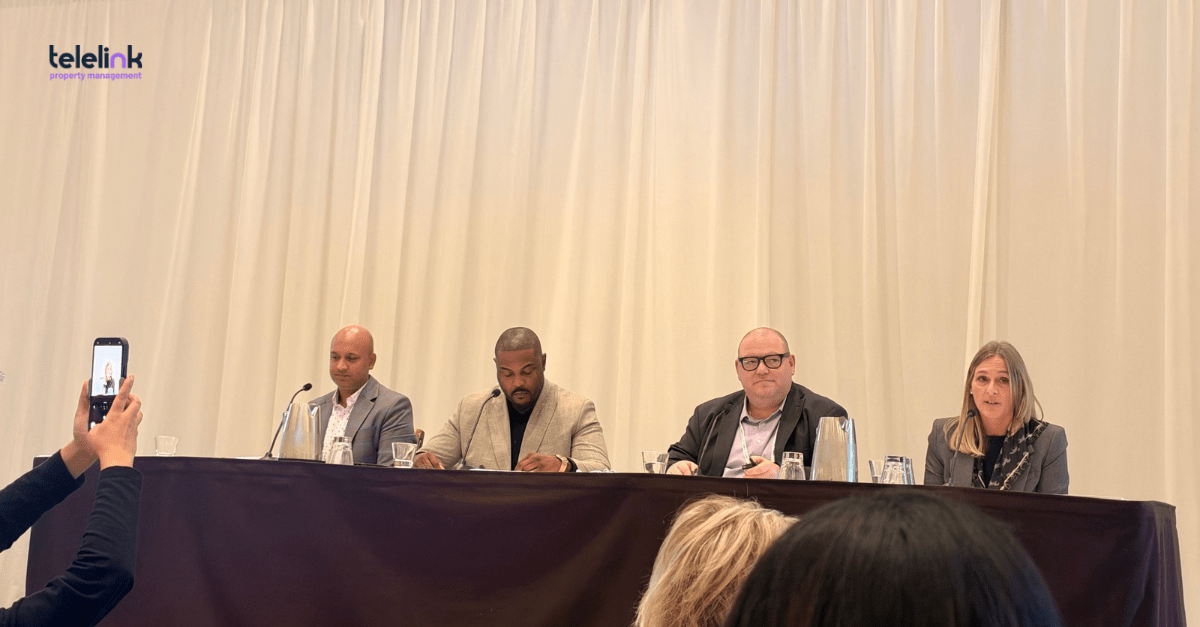
Ottawa Community Housing did it again. Last year, their rent and lease modernization story was one of our favourites. This year, "From Data to Action: Using AI to Drive Community Outcomes" was easily one of the best sessions we attended.
Their starting point will sound familiar to a lot of housing providers: they were data rich but information poor. They had plenty of data: arrears in one system, work orders in another, safety reports, Landlord and Tenant Board applications, and a lot of knowledge living only in staff members' heads. It just wasn't connected.
Here's how they changed that, with no new staff and no new budget:
- Brought the data together: They agreed on five trusted signals and built one shared view of all 139 of their communities, grouping each into one of four profiles, from "sustainable" to "intensive support."
- Brought the people together: Rent and lease, maintenance, community development, safety, and tenant support staff sat at the same table, looking at the same numbers, instead of debating whose numbers were right.
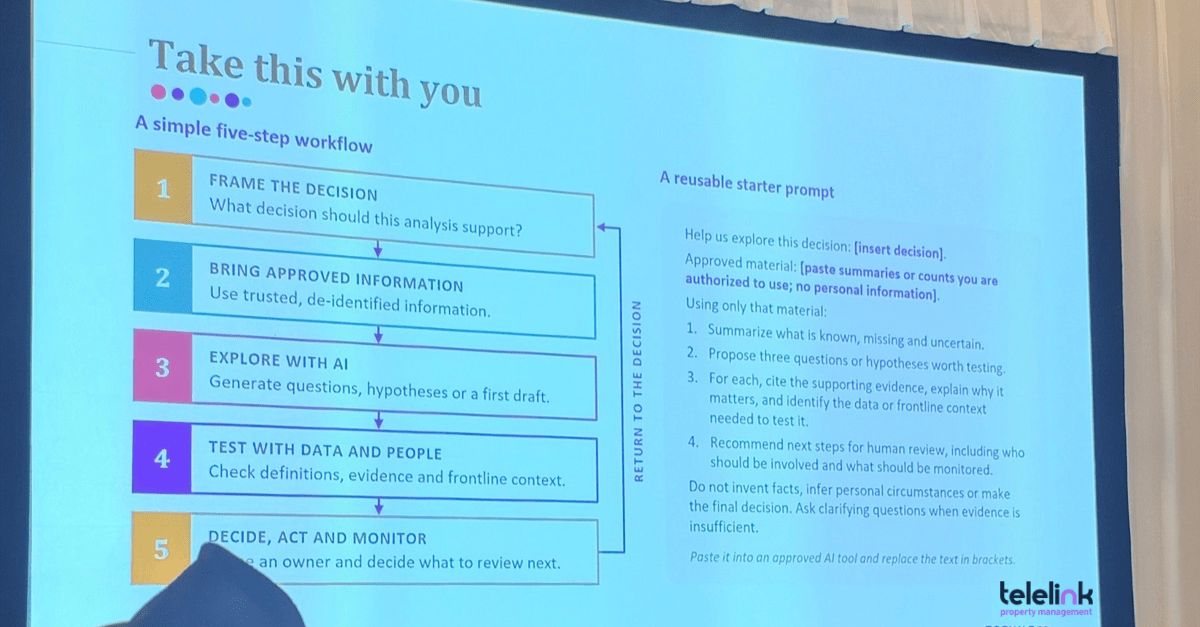
- Used AI to move faster: Tools like Microsoft Copilot and Claude helped analyze ideas, challenge assumptions, and turn the room's notes into a first draft before the coffee break was over.
The result? A process they estimated would take two years reached the draft stage in about two and a half weeks. And AI didn't make the decisions. People did, and no personal tenant information was shared with the AI tools.
The Q&A showed just how curious the sector is about AI, with lots of questions about privacy, IT policies, and getting hesitant staff on board. Curiosity is high, and so is the need for clear guardrails. (If you're exploring this too, our AI in Affordable Housing article is a good place to start.)
The takeaway? You don't need a big budget to get started. Pick one decision, a few measures everyone trusts, a shared spreadsheet, and an AI tool you may already have. Their challenge to the room: try it on one decision in the next three months.
5. Keeping the Lights On Matters as Much as Cutting Ribbons
With so much excitement around new developments, one message kept coming up across sessions: maintaining existing homes is just as important as building new ones.
One line from the GTHA session stuck with us: we get excited about cutting ribbons on new buildings, but sometimes forget about keeping the lights on and roofs over existing tenants.
And the need is real. Ontario's community housing faces an estimated $22.2 billion in capital repairs over the next 10 years, including $12.5 billion in critical repairs.
The takeaway? Success isn't only about how many new units get built. It's also about how many homes are preserved and how many tenants stay stably housed.
And preserving homes isn't only about big capital projects. It's also the tenant who calls about a small leak at 2 a.m., and the quick response that keeps it from becoming a flooded unit. Over time, those calls tell a story. When you spot the patterns in them, like the same building reporting leaks every winter, you can plan repairs before they turn into emergencies.
Final Reflections
Conferences like ONPHA remind us why this work matters so much. Last year, the stars were aligning. This year, the sector is fired up, and you could feel it in every room.
Hearing directly from housing leaders reminded us how much can happen when we choose collaboration, show up for our communities, and use what we already have in new ways. We also loved connecting with so many affordable housing providers, people whose heart for the work and the communities they serve truly inspire us.
At Telelink, we're proud to support housing providers who are building better systems and stronger communities, one conversation at a time.
About Telelink
Telelink is Canada's leading answering service partner for Affordable Housing Providers who value resident relationships. Our specialized Property Management division understands the unique realities housing teams navigate every day, from maintenance triage and after-hours communication to resident support and operational overflow.
Our scripting process is built around industry best practices and tailored to your workflow. Every script is designed to separate urgent and non-urgent calls while capturing every critical detail and minimizing unnecessary follow-ups. The result? Less stress for staff and a smoother experience for residents.
Want to see how housing providers are streamlining maintenance and improving tenant satisfaction? Check out one of our Property Management case studies.
Please note: Telelink is not a property management company. Telelink is a 24/7 call centre that specializes in servicing the property management industry. The opinions expressed in this article reflect our experience working with hundreds of property management and affordable housing organizations across Canada, conversations with industry subject matter experts, and our own informed perspectives built over 60 years in the industry. This content is not intended as regulatory or compliance guidance.