
As a call centre with a specialized property management division, we have a front-row seat to the challenges property teams across Canada face. Maintenance and parking used to lead those conversations. Now leasing does almost every time.
The shift makes sense when you look at where the market has been. Before COVID, in markets like Toronto, Vancouver and Montreal, many for-profit operators sat at or near full occupancy. Turnover was low, demand was high, and leasing inquiries came in faster than anyone could answer them.
Today, renters are more price-sensitive, more people are sharing units or staying put, and lower-cost options are creating greater competition in some markets. Vacancy is climbing, and leasing inquiries have slowed down to a trickle.
That is what has moved leasing to the top of the concern list. As one team lead explained it, a couple of years ago missing a leasing call was no big deal because three to five people were waiting on that same unit. Now those calls are rare enough that missing one can mean the unit sits empty for weeks, resulting in lost revenue that can't be recouped.
So, the obvious question is: is this temporary, or simply how leasing works now?
To get a clearer picture, we spoke with Theresa M Lapensée of ResidentOps Studio, who brings 23 years of experience helping landlords and operators across Canada navigate leasing, operations and resident experience.
Her perspective was candid, practical and grounded in what she is seeing across the industry. Here are the key insights from our conversation.
Waiting for the old market to return is not a strategy
The question everyone wants answered is when will this go back to normal. Theresa’s honest answer is that it is unlikely to happen soon.
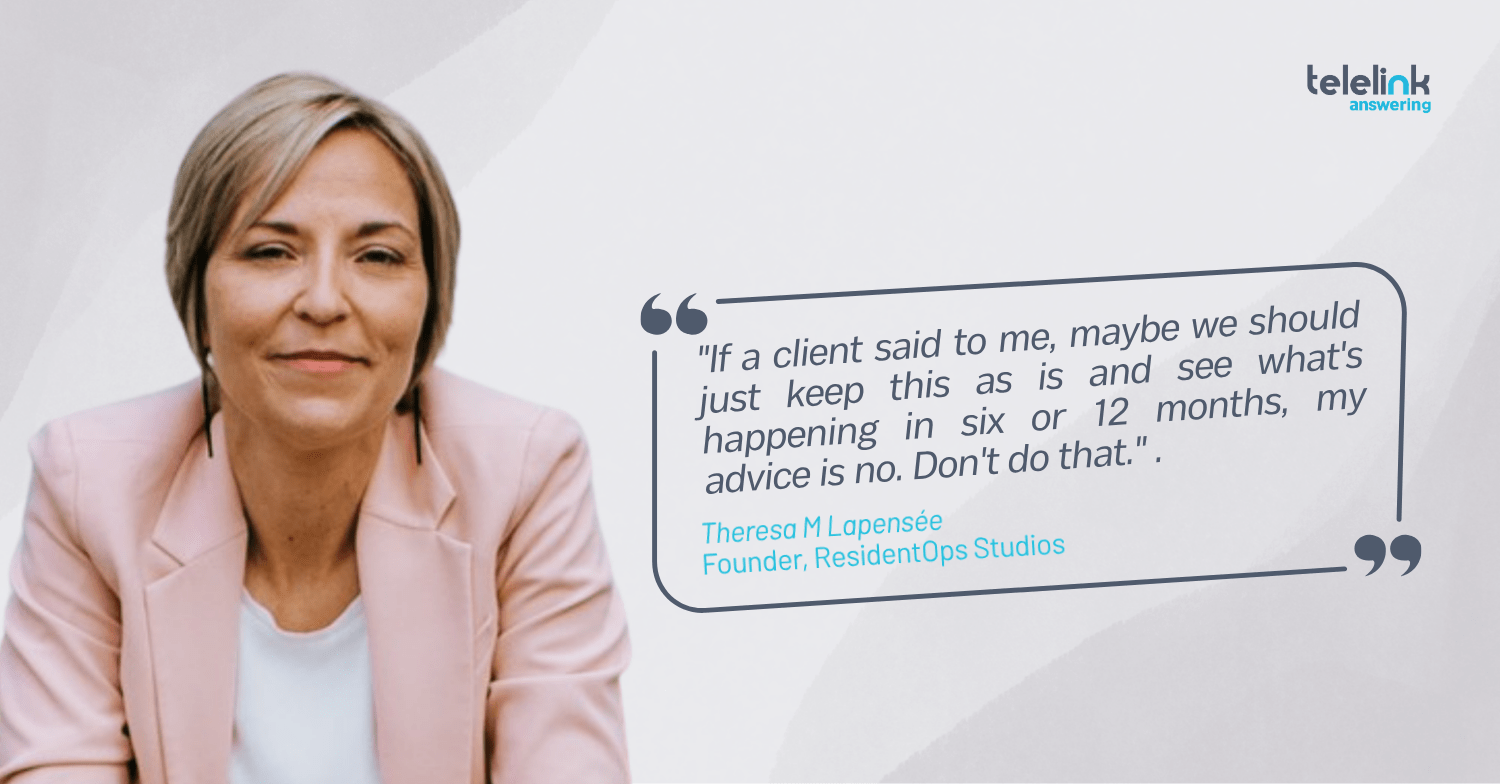
"If a client said to me, maybe we should just keep this as is and see what's happening in six or 12 months, my advice is no. Don't do that."
It is tempting to see this market as a blip, something to absorb quietly until demand returns and the old playbook starts working again. But the risk of waiting becomes clearer when you look at how renter behaviour has changed.
It may look as though Canada suddenly has more rental supply, but the bigger shift is in how people rent. As affordability pressures increase, more people are getting roommates, staying with family longer or remaining in their current units instead of moving.
These patterns are unlikely to reverse on a predictable schedule.
So, the better question is not how long this lasts, it is what property teams can change so the market shift has less impact on occupancy and revenue.
Property teams need to walk a mile in a renter's shoes
Responsive leasing is not only about what happens after an inquiry arrives. It is also about noticing what may be keeping a unit from leasing in the first place.
Theresa shared an example of an apartment that sat vacant for four months. The view included visible mechanical equipment, which made the space feel less appealing. The team added white roller blinds and dropped the rent by $49. It leased within 18 days.
The change was small. But someone had to notice the problem first.
That means time to walk vacant units, hallways, elevators, parking areas and shared spaces as though you were seeing them for the first time. It means reviewing competing listings and knowing honestly how your property compares.
Theresa's advice was to "put a hat on and pretend you are looking for an apartment," because the applicant's perspective surfaces things an internal team has long stopped noticing.
A more competitive market requires a more personal approach
When demand was high, a leasing team could do the minimum and still fill units. Unlock the door, point out the balcony, state the rent, and ask whether they want to apply.
That stops working when prospective residents have options.
Now it helps to understand why someone is moving, where they work, what matters to their family, or whether they have pets. A nearby school, a dog park, a bus route, a grocery store two streets over can matter far more to them than a generic list of amenities.
Theresa described this as a consultative approach to leasing. When people have choices, connecting with them and helping them picture the property in their actual life becomes the job.
The leasing inquiry is often someone’s first experience with the property management company. A slow, confusing or dismissive response does not only risk the lease, it also shapes what that person expects the resident experience to feel like.
Speed protects leasing momentum
The apartment search starts long before someone contacts a leasing team. By the time prospective residents call, many have already reviewed the photos, floor plans, neighbourhood and comparable properties.
Their inquiry often comes closer to the end of their research than the beginning. They want an answer to a specific question, reassurance about the community or help taking the next step. When the response takes too long, they move on to the next property.
When we asked Theresa where teams lose the most leasing opportunities, her answer was immediate: in the time between the first inquiry and the prospective resident walking through the unit.
“You could spend five to six days emailing, calling, texting, sending photos, sending videos, and they never actually see the apartment.”
Interest has a shelf life. Theresa’s approach is to answer the essential questions, then guide the person toward a viewing while that interest is still high.
That pressure to respond quickly is exactly why many teams have turned to AI answering. The instinct is right: speed matters in this market. But whether AI alone can move a prospective resident forward is a different question.
AI in property management call answering: right or wrong?
AI is genuinely useful in property management. It can confirm that a work order was received, answer routine questions, collect initial details, and handle administrative tasks without anyone feeling shortchanged.
Leasing is where Theresa sees it fall apart, and her reasoning starts with the renter rather than the technology.
Many callers have already completed much of their research. What they need now is help booking a viewing, answering a question the listing did not cover or deciding whether the property feels right for them. When someone is choosing a home in a community, emotion and trust are part of the decision.
"You can't use AI for the most important part of the business, which really is connecting with people" Theresa said.
AI can serve people calling with routine questions. It becomes less effective when someone needs context, reassurance or help moving toward a decision. That is what makes a 24/7 promise backed only by AI risky.
Someone calls Saturday evening because your website says you are open, spends several minutes with a bot collecting information they mostly had, asks for a person, and is told nobody is available until Monday at 9am.
The intention was to be helpful by staying open. The result is a frustrated caller with no clear next step.
If round-the-clock availability is going on your website, there needs to be a clear path to human support. Let technology handle routine questions and structured intake but when the caller needs more? A trained person should be able to take over, understand the caller’s tone and intent, and move the conversation toward the right next step.
How to be more responsive without burning out the team
"Just respond faster" is not practical advice when a team is already at capacity. Theresa offered three practical ways to improve responsiveness without placing the entire burden on internal staff.
- Set clear boundaries for staff. Tell them exactly what is on offer for applicants and tenants, and what is not. Without that clarity, leasing agents bend over backwards on terms that were never realistic, and everyone ends up frustrated.
- Prepare for the predictable friction points: Review the questions and situations that repeatedly slow the team down. Would a script help? Would an automated first reply help? One team Theresa worked with was receiving repeated Facebook Marketplace follow-ups from people who had not received an immediate response. A simple automated message acknowledging the inquiry and setting a realistic response window reduced those messages by 50 to 60 percent, giving staff more time to focus on leasing.
- Make service its own function, not something squeezed in between other work. "Service should not be something you're just trying to cram in between property management tasks. It should be its own part of your business that you're giving time to."
Where this leaves property management teams
The challenge is that everything Theresa described requires capacity.
Walking units, providing consultative showings, responding after hours and being present enough that callers do not feel rushed can be a lot to ask of a team that is already stretched. Staffing evenings and weekends internally can also be difficult.
This is where Telelink can help.
For more than 60 years, Telelink has helped organizations across industries stay available around the clock. Through our specialized property management division, trained agents provide 24/7 live answering for property management teams.
Our AI Voice Agent also includes a human off-ramp, allowing routine questions and structured intake to be handled efficiently while giving callers access to a trained person when they need one.
Together, these solutions give property teams a practical way to extend their availability without requiring internal employees to carry every evening and weekend call themselves. Responsiveness becomes part of the service model rather than another responsibility an already-busy team has to absorb.
Thank you to Theresa Lapensee for sharing such generous and candid insights into the changing leasing landscape.
Is leasing responsiveness becoming a bigger concern for your team? We would love to discuss what the right coverage could look like.